
Starting from Adolfo Bioy Casares’s story of a room at the edge of the universe hidden in East Berlin, this essay introduces the “archive of the East”: it is a Foucauldian relational archive that traces how Cuban writers since the 1990s have imagined Eastern Europe, the Soviet Union and China. Focusing on the magazine Diáspora(s) and authors such as Carlos A. Aguilera, Rolando Sánchez Mejías, José Manuel Prieto and Abel Fernández Larrea, it shows how the imaginary of the East served as a space of exteriority, camouflage and translation, reinscribing and reworking Kafka, nineteenth-century cosmopolitanism and Latin American literary traditions. The archive is ambivalent: it both speaks and does not speak about Cuba, shifting both geography and time. Tracing a chain of metropolises from Berlin to Moscow, Beijing and back to Havana, the essay reads the East as a reading machine that redesigns the nation, the canon and the figure of the writer.[1]
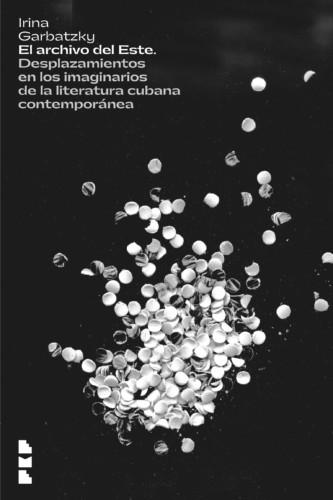
Garbatzky, Irina (2024): El archivo del Este. Desplazamientos en los imaginarios de la literatura cubana contemporánea. Editorial: EME, ISBN: 9789874852083
Generate PDF
In Adolfo Bioy Casares’ short story El cuarto sin ventanas [The Room Without Windows], the first-person narrator remembers an incident during a trip from West Berlin to East Berlin. The protagonist, a writer, is crossing the border as part of a scheduled sightseeing tour. He meets an Italian cosmographer who has lived on both sides of the wall. The writer confesses that he has been interested in cosmography since childhood: he was concerned about knowing the limits of the universe and imagined it as a small room. Hearing this, the cosmographer suggests slipping away from the group to visit “a place that will interest you” (1986: 464). Fearful – the scene takes place in a heavily guarded area – but still capable of irony, the protagonist decides to follow him (“I didn’t come to Berlin to see trees,” he says to himself). The cosmographer leads him to a room that is identical to the one the writer had imagined in his childhood, a room with a window and a staircase. The cosmographer explains that this is the edge of the universe. On the other side, there is nothing but repetition: windows and staircases that lead back to the same room, with the same angles, even the same cobwebs.
doi number
doi: 10.15457/frictions/0049
The space imagined by Bioy Casares pays homage to Escher’s drawings: rooms change orientation to connect staircases and doors to infinity. This is how the end of the universe, “the big box, with the complete set […], (the) totality of solar systems, celestial bodies and stars”[2] is found in East Berlin; its shape is that of a coil or a loop that incessantly leads back to the same small room, turned into a black hole, a spatial interval.
Although the notion of infinity found on the outskirts of a city – whether of Berlin or any other metropolis– is a characteristic motif in both Bioy Casares’s and Jorge Luis Borges’s literature, ‘The Room Without Windows’ also highlights a theme that is highly typical of Cold War topographical imagery: in the East there would be a boundary, the end of one world and the beginning of another, outside of time and known coordinates. Without windows, but open to the cosmos, it is excluded from cartography; unlike other places, it enables countless journeys, even though crossing its border threatens the impossibility of return.
the East involves much more than a series of territorial boundaries and historical references, becoming instead a complex node of representations that acts on several fronts. In Cuban literature, the East has a long lineage: from the Japanese collections of Julián del Casal in the nineteenth century to the Chinese and Indian incursions in José Lezama Lima and Severo Sarduy in the twentieth century. Here I am concerned with another “East”, one linked to the particular transcultural experience between the Soviet Union and Cuba, sustained by economic and political exchanges, hybrid families and university study trips, but which, above all – and this is what interests me – enabled the construction of an alternative world, a reinvention in literature through genealogies, reading traditions, and precarious libraries, often built with great difficulty.
The Multiple Locations and Temporalities of the East
This image of the East has had a powerful presence in a strand of Cuban literature written since the 1990s, in the wake of the reconfiguration of the world that took place in 1989. The atmosphere present in a series of fictional and poetic works set in Eastern Europe, China and the former Soviet Union is already evident in their titles: Enciclopedia de una vida en Rusia [Encyclopaedia of a life in Russia] (1998), Livadia (1999), Otras cartas a Milena [Other letters to Milena] (2003), Das Kapital (1997), El Imperio Oblómov [The Oblómov Empire](2014), Cuadernos de Feldafing [The Feldafing Notebooks] (2006), Asia Menor (Asia Minor) (2015), La irresistible caída del muro de Berlín [The Irresistible Fall of the Berlin Wall] (2016) or Absolut Röntgen (2015), to name just a few.
My work does not follow a chronology nor does it seek to provide an exhaustive map.[3] Instead, it seeks to go deeper into these settings by exploring the influence of Diáspora(s), a magazine published in Havana in the late 90’s, together with the impact of some of its authors.[4] The Eastern settings in the texts of Carlos A. Aguilera, Rolando Sánchez Mejías, and José Manuel Prieto offer a glimpse of the persistence of the Soviet Bloc and other communist states in other Cuban contemporary works, including the writings of Antonio José Ponte, Reina María Rodríguez, Jesús Díaz, and Fernando Villaverde. From this perspective, the East expands over the past – as is evident in the works of Virgilio Piñera or Alejo Carpentier – but also over the present, when considering the Generación Cero (Zero Generation, the generation that started publishing in the early 2000s), including the work of Abel Fernández Larrea. In all of them we can find stories set in the socialist bloc countries.
However, as Edward Said pointed out in his now classic work Orientalism, the East involves much more than a series of territorial boundaries and historical references, becoming instead a complex node of representations that acts on several fronts. In Cuban literature, in fact, the East has a long lineage: from the Japanese collections of Julián del Casal in the nineteenth century to the Chinese and Indian incursions in José Lezama Lima and Severo Sarduy in the twentieth century.[5] Here I am concerned with another “East”, one linked to the particular transcultural experience between the Soviet Union and Cuba, sustained by economic and political exchanges, hybrid families and university study trips, but which, above all – and this is what interests me – enabled the construction of an alternative world, a reinvention in literature through genealogies, reading traditions, and precarious libraries, often built with great difficulty. The archive of the East is linked to Latin American mechanisms of imagination, which incorporate and appropriate foreign imaginaries to fuse them with their own. It is a literary experience that goes beyond the actual intercultural contact that existed between Cuban and Soviet societies.
How were the remains of that historical interval written, the remains of that room with (and without) infinite windows? For Reina María Rodríguez (2015), for example, this transcultural experience was engraved in the collective memory through its absence, like “an inventory comprised of failures […]. An inventory that doesn’t assume its identity as something we had, but as something that wasn’t anchored in our consciousness” (n/p). Thus, the scattered elements of Soviet Cuba’s material and artistic culture – documents and everyday objects, as well as artistic, films and literary productions – function as traces of a lost and fragile world. These elements were first incorporated, and then erased, in the Perestroika and Glasnost periods in the 1980s Soviet Union. Cuban government policy sought to efface that history and instead began to emphasize national memory. According to Rafael Rojas, Moscow abruptly went from being a model metropolis to an uncomfortable legacy of the recent past. By considering writing as a territorial construction – whether it is carried out by an hegemonic power or by a countercultural multiplicity – I am thus interested in conceptualizing the East as a relational Cuban archive, adapting Michel Foucault’s concept of the archive: not a documentary accumulation of a historical episode but as a systematization and emergence of an enunciative constellation.
In Foucault’s Archaeology of Knowledge, far from acting as a transparent reservoir of the past, the archive operates in the present tense, like a reading machine, projecting its lines and signals. The archive is formed neither of the sum of the texts or what has been said, nor of the institutions that guard or record them; the archive is the norm that produces its emergence as the “system that governs the appearance of statements as unique events […] the archive defines a particular level: that of a practice that cause a multiplicity of statements to emerge as so many regular events, as so many things to be dealt with and manipulated.”.[6]
The archive of the East would thus provide a set of images that allowed several Cuban writers and artists active at the turn of the twenty-first century, to redesign the boundaries of the nation and the canon, and, within those boundaries, the notion of the human (the “New Man” as an ideal) and also the conflict between the writers and Power (or the State). At the same time, and just as importantly, given the impact of foreignness and translation throughout Latin American literature, it is inevitable that the archive of the East would resemble the Latin American archive. The gathering of images of the Soviet Union, communist China and Eastern Europe, as well as the exotic projections of the cold and white landscapes, was not oriented towards a precise geography but rather towards the heterogeneous figures from which the Latin American archive draws its strength.
The archive of the East is thus ambivalent, since it both speaks and does not speak about Cuba; it writes about it yet does not write about it. […] What forms can the transversality established here, in these stories, thus take? Stories that take up and quote the pathos of Uncle Vanya, the figurations of a cold, steppe-like nature, and the exotic, prefigured vocabulary that only those who have lived in Moscow or spent their childhood in Pripyat would know? Between the aspiration for a global condition, detached from national representations, and the return of Latin American archival processes, these writings find a tension, a productive aesthetic and political ambivalence.
Diaspora(s) and the East
There are thus certain issues that the archive of the East allows us to highlight and discuss. In the literature emerging around the magazine Diaspora(s), the insistence on Eastern landscapes, settings and references is related to the search for otherness, a ‘playful-delirious territory’ (Silva 2015) that, on the cartography of the broader Slavic region, juxtaposes unreal stories and situations, emphasizing an artificialization and estrangement from the known, an impulse to escape. For Diaspora(s), talking about the East meant promoting a rarefaction of language and bodies. In her analysis of the “erosion” caused by the magazine, Guadalupe Silva starts with its title, observing that its effect was the fact that “the diaspora can be, not only a matter of politics and the history of nations, but also a fact of language” (Silva 2015: 147).
The erosive poetics of Diáspora(s) therefore pointed to the creation of an outside, which in the first place was an outside of the national discourse and the national canon. Aguilera, the editor of the magazine, refers to it in the prologue to his first book of poetry. In Retrato de A. Hooper y su esposa [Portrait of A. Hooper and his wife], (1996) he endeavours “to build a narrative that is situated outside institutional thinking” (9), while in the “Warning” to his book Das Kapital, in 1997, he gives the date and place of writing as “Calcutta, 1993”. From the first issues of Diáspora(s), the East, as a setting that would remain present in his future works, also turns out to be a search for exteriority. This is not merely a metaphorical strategy: one of the ways in which it takes shape is in the large number of translations published by the magazine, not only of texts from the postmodern debate (as Gilles Deleuze, Jacques Derrida, Toni Negri, Peter Sloterdijk), but also of German, Russian, Austrian and Czech writers and essayists characterized by experimental, humorous and, in some cases, critical writing: Joseph Brodsky, Thomas Bernhard, Ror Wolf, Elias Canetti, Hans Magnus Enzensberger, Ernst Jandl, Daniil Jarms and Milan Kundera. The common thread underlying these authors, in their radical and absurd way of setting limits on humanist rationalism, is Franz Kafka and, with him, Virgilio Piñera, the rediscovered master. Here it is important to underline that Piñera was one of the first reviewers and critics of Kafka in Spanish, and his literature has a lot of elements in common with the Czech author.
Kafka permeates the insectivorous scenes imagined by Sánchez Mejías in third issue of Diáspora(s), and Kafka is also the figure who traces an alternative imaginary territory, from Havana to Kierling, in “Diez mil años” [“Ten Thousand Years”], the story from Sánchez Mejías’ first book, La noche profunda del mundo [The Deep Night of the World, 1993]. Invoking the East in this way meant landing on the island of a linguistic and territorial reinvention while also inexorably provoking the questioning of other limits, including the limits of the human. In the Kafkaesque vein, the writings of Aguilera and Sánchez Mejías evoked animals and disfigurements of the body, while also reworking the canon, based on the recoveries of Piñera, Lorenzo García Vega and Heberto Padilla (all writers that were banned by the Revolution), as a gesture of renewal. These shifts, in turn, involved leaving literature and taking forays into other forms, such as performance or video poetry.
At the same time, the archive of the East, with its references to cosmopolitanism and Orientalism, reactivated a nineteenth-century and modernist archive. This is particularly visible in novels such as Enciclopedia de una vida en Rusia [Encyclopaedia of a Life in Russia, 1998] and Livadia (1999) by José Manuel Prieto, where the desire for a cosmopolitan world and the presence of certain nineteenth-century themes – poise, affectation, fashion, decadent erotism, dandyism, naturalism – generate particular sensibilities. Sensibility which, whilst finding fundamental precedents within the tradition itself –such as Julián Del Casal –had been excluded from the literary history of the revolution.
It is no coincidence that in 1994, on the centenary of his death, several writers from the new generations decided to revisit the figure and work of Del Casal.[7] Faced with the new turn of the century, their tribute and the reinterpretations of the nineteenth century in general highlight the relevance of key questions, both for writers of that time and for those of the present. Some questions include the issue of autonomy and professionalization of writing, the relationship with journalism and the publishing market – with many Cuban writers finding themselves adrift in a disturbing limbo when they left their country – and the challenge of constructing a poetics independent of the State alongside a politics that would include body-politics, such as sexuality, affectivity, or self-care as an issue of equal or greater importance than the modern values oriented towards productivity.
In this way, Prieto and Fernández Larrea write stories that take place in different parts of the vast Soviet territory, drawing on Russian imagery, language and authors, that is, inscribed in a tradition that predates the avant-garde and socialist realism. In the case of the first one, the Russian “encyclopaedia” covers and mentions the forms of kitsch, dandyism and naturalism. In the latter, the focus is on Anton Chekhov performing the role of a narrator of the Chernobyl catastrophe. In both cases, based on these assumptions, the modernist artifice comes to the fore, by appropriating a foreign tradition and embodying it as a pose or a mask, until the marks of that foreignness resonate in language itself. Thus despite invoking the spectre of Orientalism, this is not a revival of colonial exoticism, as Idalia Morejón Arnaiz (2011) explains, but rather an alternative movement, stripped of the desire to document the Other through a pre-established and univocal framework.
Towards the end of the twentieth century and well into the twenty-first, Cuban literature can be viewed within the broader Latin American context, in which narratives are freed from the duty of representing constructions of national identity and begin to be a part of the debates on literature and globalization.[8] This new condition allows us to find a double meaning for Cuban literature, one no longer only limited to the Revolution, but also related to the conditions of diasporic subjects. According to Josefina Ludmer, rather than being characterized as “internal” or “external” productions, these textualities are determined by an effect of reading in global circulation. “This spatial fiction would lead us to think that [Cuban] literature is no longer a manifestation of national and territorial identity, because today any Latin American city is made up of internal cities, islands or fragments of cities. It is a form of territorialization that is the site and setting for other subjectivities or identities and other politics” (2004: 358), she observes.
The archive of the East is thus ambivalent, since it both speaks and does not speak about Cuba; it writes about it yet does not write about it. The East would provide an opportunity to erase (and blur, that is, rewrite in draft form) the marks of origin, while also offering an opportunity to avoid revealing any insular elements. In Prieto’s case, the Cuban nationality of the protagonist is merely mentioned in passing; in Absolut Röntgen’s stories, the absence of the local is absolute. Fernández Larrea writes narratives without any Cuban trace.
In these cases, the emergence of the East can be associated with camouflage: appropriating those settings, their traditions and even the tones of a literary language, as is the case in most modern exercises of translation and transposition. What traditions did these authors reactivate when they took the East as a mask for themselves? In La condición traductora [The Translator’s Condition] (2014), Martín Gaspar proposes that Latin American culture was born in translation and that its history goes far beyond mere linguistic translation. Translation enabled Latin Americans to think of our own identity as a figure of intersection with heterogeneity; according to Susana Zanetti (2004), cultural multiplicity is the central backdrop of reading in Latin America. Let us recall that well-known passage by the Cuban modernist author José Martí, for whom translating meant trans-thinking (“traducir es trans-pensar”: to translate is to think through, he said). In his famous chronicles on Ralph Waldo Emerson and Walt Whitman, his voice converged almost ventriloquistically with the voice of the other. What forms can the transversality established here, in these stories, thus take? Stories that take up and quote the pathos of Uncle Vanya, the figurations of a cold, steppe-like nature, and the exotic, prefigured vocabulary that only those who have lived in Moscow or spent their childhood in Pripyat would know? Between the aspiration for a global condition, detached from national representations, and the return of Latin American archival processes, these writings find a tension, a productive aesthetic and political ambivalence.
The work proposed by the archive of the East on contemporary Cuban literature would therefore indicate not only a geographical shift, but also a temporal one. The cosmopolitan reminiscences of the nineteenth century served, in this line of speculation, as a way of knowing what it means to be a modern writer, of recovering their figure. This question was rightly raised at a time when the certainties of the literary institution were breaking down, as was the role that writers had played in it throughout the century, both within the socialist regime and in the neoliberal world. As Iván de la Nuez (1999) points out, the Berlin Wall fell on both sides, (with consequences for both sides), and therefore, together with the opening up of the East, it also produced ruptures and reconfigurations in the cultural landscapes of the West, too. Towards the end of the twentieth century and the beginning of the twenty-first, in the digital era, the culture of books is perceived to be in a borderline, liminal zone. Cuba is no exception. It could thus be argued that the literature of these authors brings to the fore Literature itself, not only History with a capital H, but above all writing processes and styles.
The encyclopaedia or epistolary genre in Prieto’s novels, the lengthy glosses, commentaries and transcriptions in La fiesta vigilada [The Monitored Party], an autobiographical essay by Antonio José Ponte, or the travel diary or map in Aguilera and Sánchez Mejías, all reaffirm and showcase the impulse of “archival fiction”, to use Roberto González Echevarría’s concept (2000). After the narratives of the so-called Boom of Latin American Literature, showing the stitching no longer seeks to convey the depth of the Latin American palimpsest, but rather to question the power of reading to design an expanded identity. As if the exposure of writing gave rise to the writer, even if it is precisely someone who writes from a distant landscape or perspective.
Journeying across Metropolises of the East
Looking towards the East, my book is organized along a metropolitan chain, with Berlin forming its first link. I am interested in exploring the idea of Berlin as a beacon or symbol for Cuban literature at the turn of the twenty-first century, with the ability to reconnect the Cuban intellectual community scattered around the world and also as an imaginary epicentre, where the fantasies and fears of openness, the different dimensions of the future and history converge; that is, a geographical point that can function, intermittently, never completely, as a speculative possibility. In the context of the late 19th century and also more broadly, Zanetti analysed the roles that certain cities, such as New York, Paris, Mexico City and Buenos Aires, played for Latin American writers and intellectuals. The notion of “relinking” developed by the Uruguayan critic and historian Angel Rama, refers to those nodes on the map that become signifiers of the universalzation of cultural experiences in certain contexts.
Berlin functioned as such in the works of many Cuban authors during the crisis of the 1990s. The influence of institutions that financed travel, research and creative grants, such as the DAAD or the IAI (Ibero-American Institute in Berlin), was undoubtedly decisive. But beyond the economic and historical conditions, which were essential in this reconnection, I am interested in emphasizing the idea of a city that imaginatively presents itself as a centre of multiple temporalities (ruins and wars, reconstructions and musealisations) and therefore of open, unfinished endings. Berlin is the mirror of a boundary that, like Bioy Casares’s story, can both open and close.
In my study, I propose a reading of a group of stories linked to the world of the Cold War, surveillance, cross-border trafficking, and blurred and changing identities. Stories by Jesús Díaz, Fernando Villaverde, Odette Casamayor Cisneros, and Antonio José Ponte, whose protagonists are defined by suffering at the borders, their integrity permanently threatened, and for whom masking and dissolving the self become imperative for survival. In these stories, Berlin functions as a vanishing point and convergence in their life experience: they write about Berlin because they have lived there and because from there they were able to encounter the island from the outside, in a particular state of interval, very similar to the one I described in the Bioy Casares story at the beginning of this piece. Although they belong to different generations (unlike Ponte, the first two were born before the Revolution and Díaz was an important figure in the revolutionary cultural avant-garde during the 1960s), for each of them, retelling their time in the German capital means, in a way, rehearsing and retelling what they experienced. Only, in contrast to avant-garde rhetoric, it is not a question of narrating life in a representative or testimonial sense, but rather of narrating, barely, a life amid the random vicissitudes of borders.
As a beacon city, Berlin allows us to think about the physical constitution of the city, in the vestiges of destroyed buildings that remain as places of memory, and thus to project ourselves onto the ruins of Havana and its time, its other time. Because in all the texts that pass through the archive of the East, in one way or another, time is presented as a crucial problem. The dislocated time of history, which emerges as a setback from the revolutionary event, as untimeliness and as an alternative future; and the non-time or past future that Cuban writers encounter after the fall of the Wall. A vital experience that returns from the future, according to De La Nuez, from writers who have lived the futurity of the avant-garde and who, at the end of the century, find themselves faced with the dilemma of rethinking the possible future through the remains of that universe.
Moscow is another metropolis that functions as a core of meaning-making for Latin American authors. Just as reading Kafka allowed the writers of Diáspora(s) to exercise crossing the boundaries of language and of the New Man, Aguilera’s El imperio Oblómov [Oblómov’s Empire] allows us to read the disfigurations of the human and the future. To build his image of the East, the author revisits a nineteenth-century character and genealogy, that of Oblomov, the 1859 novel by Ivan Goncharov; this allows us to question, in another section, which nineteenth-century archives are activated in Prieto’s novels, Enciclopedia de una vida en Rusia and Livadia. I also explore the work of Fernández Larrea and his stories about Chernobyl.
Masked, renamed or disfigured bodies are a constant feature in these writings that traverse the East. In my study I also adopt a perspective from Beijing to analyze the deformation of the writer and his questioning of the animal in Aguilera’s Teoría del alma china [Theory of the Chinese Soul] and two video poems, one of which was screened as part of a performance during the Diaspora(s) period in Havana in the 1990s. A collapse of bodies gives way to animal figurations, and a fake Beijing tourist guide recalls the atmosphere of Kafka’s In the Penal Colony [In der Strafkolonie].
The chain leads back to Havana, enabling, firstly, a retrospective reading of the archive of the East, focusing on two moments of island modernity. The first is Piñera’s play Los siervos [The Servants], published in 1955 in the magazine Ciclón and set in a future where Soviet communism has triumphed globally. This is a minor or little-known work in Piñera’s oeuvre, not even included in his Complete Theatre. On the other hand, there is the monumental La consagración de la primavera [The Rite of Spring, 1978], one of Carpentier’s last novels, about the revolutionary destiny of a Russian ballerina and her idea of staging Igor Stravinsky’s ballet in Guanabacoa, a small town in Havana province.
Although both texts were written outside the timeframe mentioned at the outset here, I am interested in including them as illustrations of the opening that the archive of the East produces onto the past. Unlike writers who sought to register their experience in the Soviet world (such as the memoirs of Heberto Padilla or Lisandro Otero, and their travelogues to the Soviet Union, or even, more recently, Leonardo Padura in El hombre que amaba a los perros [The Man Who Loved Dogs], about the life the Leon Trotsky and his assassin), Piñera and Carpentier set out to experiment with the East as part of their own search for a unique condition for their literature. For both, one in the mid-1950s and the other in the late 1970s, the East provided a source of images to draw on and experiment with, whether in a somewhat pop or kitsch way, or as archetypes reflecting part of the cultural history of the century. This means it is also necessary to consider the aesthetics of avant-garde processes, which in the mid-twentieth century began to incorporate conceptual elements, revisions of their aesthetics and rearticulations of their languages. Communism as a particular state of language (as proposed by the critic Boris Groys) functions as the conceptual and dramatic scaffolding of Los siervos [The Servants]. In Carpentier’s book, the museum-like nature of the revolutionary experience and the use of pastiche provoke a postmodern reading.
Kafkaesque appropriation was also a feature of literature produced in Havana during the post-1991 Special Period, manifesting itself in two particular modes. I search for the traces left by the Czech Jewish author on Cuban literature not only in the themes related to totalitarianism, but more fundamentally in depictions of humanity and its rationality being pushed to the limit.
This is evident in texts by Sánchez Mejías, Aguilera and Reinaldo Arenas that foreground the question that Piñera asked in his essay ‘El secreto de Kafka’ [The Secret of Kafka] regarding the future of Kafka, his literature and his readers. The writing of Reina María Rodríguez in her Otras cartas a Milena [Other Letters to Milena] offers another Kafkaesque appropriation, this time in the form of letters to another Milena: no longer Kafka’s Milena, but Elis Milena, her daughter. In the letters and short autobiographical stories, the East takes the form of a library and even a genealogy, one that is at the same time Kafkaesque, Russian and Soviet, while being composed mainly of women: Marina Tsvetaeva, Anna Akhmatova and Nina Berberova. This library, which the author superimposes on everyday settings, is projected onto a strange city in crisis through evanescent objects. Thus, the dried flowers that Berberova looks at Aleksander Blok’s funeral are immediately transferred to the Havana setting to recall other losses: “only a few dried flowers that were once white lilies, four to be precise, are next to my desk this morning” (Rodríguez 2014: 78).
Conclusion
The Archive of the East, as I mentioned at the beginning, is assumed to be a reading machine, which makes orientations and discourses visible. It is, at the same time, the canonical archive of the Revolution and the archive of espionage that disfigures it; it involves the archive of cross-border lives and those of the literary tradition activated by reading of those lives. It functions as the setting for the heterogeneous and simultaneously as a staging of the familiar. In exploring the archive, I never refer to domestic archives or documentary evidence. The Archive of the East involves a metaphorical, interpretative exercise and, perhaps, an invention. Thus, this story, like Escher’s staircases, begins once more.
Notes
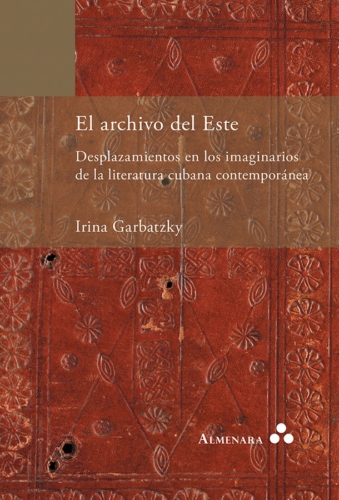
[1] The following text was presented at the Colloquium of the Chair of Slavic Literatures at the University of Regensburg, in November 2025. It is based on a translation of the Foreword of the book El archivo del Este. Desplazamientos en los imaginarios de la literatura cubana contemporánea [The Archive of The East: Displacements in the Imaginaries of Contemporary Cuban literature], published in 2024 by the small independent publishing house EME, based in La Plata, Argentina, and re-issued in early 2025 by Almenara Press, based in Leiden, Netherlands.
[2] In Spanish in the original. All translations from Spanish are by the author.
[3] To ensure deep understanding of the Soviet-Cuban constellation, the works of Damaris Puñales Alpízar, Escrito en cirílico. El ideal soviético en la cultura cubana posnoventa (2013) and Jacqueline Loss, Dreaming in Russian. The Cuban Soviet imaginery (2013), Caviar with Rum. Cuba-USSR and the Post-Soviet Experience (compilated with José Manuel Prieto, in 2012) are essential reading. See also: the websites www.sovietcuba.com, organized by Puñales Alpízar, and www.cubamaterial.com, by María Cabrera Arús.
[4]Diáspora(s) was a collective project by artists and writers in Havana aimed at reflecting on the tension between intellectuals and those in power from a conceptualist and avant-garde perspective; in other words, it sought to spark a political debate on the efficacy of language, the medium, and the artistic object. Initially, the project involved a series of performances, public readings, and cross-media experiments. In 1997, it was established as a journal, coordinated by Carlos A. Aguilera and Rolando Sánchez Mejías, with eight issues published up to 2002. See the facsimile and testimonial compilation produced by Jorge Cabezas Miranda in 2013, Diáspora(s). Facsimile edition (1997–2002). Aguilera and Sánchez Mejías coordinated the journal Diáspora(s) from issue no. 1 in 1997 to the final issue, no. 7–8, in 2002. The project team consisted of Rogelio Saunders, Ricardo Alberto Pérez, Pedro Marqués de Armas, Ismael González Castañer, José Manuel Prieto, C. A. Aguilera and Rolando Sánchez Mejías; Radamés Molina joined the team for issue 3.
[5] Said traces the history of Orientalism as an academic field of study, which emerged in Europe around the 18th century and defined a series of discourses on the East –statements, representations and positions –with the aim of establishing the East as the cultural Other of the West, whilst simultaneously bolstering the power of European colonial enterprises. For further reading on Chinese representations in Cuban literature, see the works of Rogelio Rodríguez Coronel (2018) and Ignacio López Calvo (2008). Nanne Timmer and Daniela Martín Hidalgo (2022) clearly describe the shift that occurred from the late 19th century and throughout the 20th century in Oriental signifiers, fundamentally from modernist exoticism to identification with the Revolution in the 1960s, for example in Nicolás Guillén’s Oriental-themed poems, and then towards camp, in Virgilio Piñera. When analysing the poetics of Diáspora(s) in Omar Pérez, Aguilera and Sánchez Mejías, the authors also highlight representations of the East as a territory of otherness, a breakdown of national space.
[6] Michel Foucault, The Archaeology of Knowledge, trans. from the French by A. M. Sheridan Smith (New York: Pantheon Books, 1972), pp. 129-30.
[7] I shall mention only the most significant ones and those from the late 20th century. Francisco Morán organised the centenary tribute to his death in 1993 and published the volume Julián del Casal (In memoriam) (2012) through the publishing house of the magazine La Habana elegante –a magazine founded by Casal in 1883, which Morán revived in the 1990s. In turn, Luisa Campuzano published El sol en la nieve: Julián del Casal (1863–1893) in 1999, through the Casa de las Américas publishing house; and finally, Ponte dedicated one of the chapters of El libro perdido de los origenistas (2005) (‘Casal contemporáneo’) to re-evaluating the poet, in defence of literary autonomy. If we also take into account Morán’s other book, the essay Julián del Casal o los pliegues del deseo (2008), in which he explores, from a queer perspective, the poetics of Casal’s theatricality and pose, it is possible to conclude, as Ignacio Iriarte points out: “If Casal can function in 1990s Cuba in the same way that Góngora functioned for the Generation of ’27, it is partly due to the figure of the dandy and the construction of interior spaces, filled with real or imagined objects, to fight for a separation of literature from a politicisation that invades all forms of speech and social languages” (2021: 96).
[8] On Cuban literature and globalisation see Rojas (1999), De la Nuez (2010), Morejón Arnaiz (2011), Ludmer (2014), Camenen (2014), Timmer (2016), Quesada Gómez (2016), Guerrero (2018), Timmer-Labourdette (2019).
References
AGUILERA, Carlos A. (1996): Retrato de A. Hooper y su esposa. La Habana: Unión.
—. (1997): Das Kapital. La Habana: Casa Editora Abril.
—. (1997): «Mao». En Diáspora(s) 1: 22-24.
—. (2006): Teoría del alma china. México: Libros del umbral.
—. (2014): El imperio Oblómov. Sevilla: Espuela de Plata.
BIOY CASARES, Adolfo (1986): «El cuarto sin ventanas». En Bioy Casares, Adolfo: Historias desaforadas. Obra completa vol. III (1972-1999). Buenos Aires: Emecé, 463-468.
CABEZAS MIRANDA, Julio (comp.) (2013): Revista Diáspora(s). Edición Facsímil (1997-2002). Barcelona: Lingkua.
CARPENTIER, Alejo (1978). La consagración de la primavera. México: Siglo XXI.
CASAMAYOR CISNEROS, Odette (2004): «¿Cómo vivir las ruinas habaneras de los años noventa?: respuestas disímiles desde la isla en las obras de Abilio Estévez, Pedro Juan Gutiérrez y Ena Lucía Portela». En Caribbean Studies 32 (2): 63-103.
COLOMBI, Beatriz (1999): «José Martí: Traducir, transpensar». En Inti 49-50: 59-69.
DE LA NUEZ, Iván (1999): «Inundación». En De la Nuez, Iván (comp.): Paisajes después del Muro. Disidencias en el poscomunismo diez años después de la caída del muro de Berlín. Barcelona: Península, 9-18.
—. (2001): «El Hombre Nuevo ante el otro futuro». En De la Nuez, Iván (comp.): Almanaque. Cuba y el día después. Barcelona: Mondadori, 9-20.
DÍAZ, Jesús (1967): Los años duros. Buenos Aires: Jorge Álvarez.
—. (1978): Cincuentaicinco hermanos. Largometraje, 77 min. ICAIC, La Habana.
—. (1979): De la patria y el exilio. La Habana: Ediciones Unión.
—. (2002): Las cuatro fugas de Manuel, Madrid: Espasa Calpe.
FERNÁNDEZ LARREA, Abel (2009): Absolut Röntgen. La Habana: Cajachina.
—. (2016): Berlineses. Richmond: Editorial Casa Vacía.
FOUCAULT, Michel. (2013): Arqueología del saber. Buenos Aires: Siglo XXI.
GASPAR, Martín (2014): La condición traductora. Rosario: Beatriz Viterbo.
GONZÁLEZ ECHEVARRÍA, Roberto (1991): «Últimos viajes del peregrino». En Revista iberoamericana 57 (154): 119-134.
IRIARTE, Ignacio (2019): «La realidad administrada. Reflexiones sobre la gestión de los signos por medio de tres figuras cubanas: la revista Diáspora(s), Antonio José Pone e Iván de la Nuez». En Caracol 18: 157-184.
—. (2021): «Herederos: Ponte, García Vega y Casal». En Anclajes XXV (1) : 87-102.
LÓPEZ LABOURDETTE, Adriana (2015): «El sueño de la revolución produce monstruos. Cuerpos extra/ordinarios y aparato biopolítico en La sombra del caminante (Ena Lucía Portela, 2001)». En Mitologías hoy 12: 31-50.
LÓPEZ LABOURDETTE, Adriana y TIMMER, Nanne (2019): «La nación narrada: Propuestas para una cartografía de la novela cubana contemporánea». En Cuadernos hispanoamericanos 829: 18-32.
LOSS, Jacqueline (2003): «Vintage Soviets in post-Cold War Cuba». En Mandorla. Nueva Escritura de las Américas 7: 79-84.
—. (2003): «Despojos de lo soviético en Cuba. La estética del adiós». Otro lunes. Revista hispanoamericana de cultura 8: <http://otrolunes.com/archivos/08/html/este-lunes/este-lunes-n08-a11-p01-2009.html.>
—. (2013): Dreaming in Russian. The cuban soviet imaginary. Austin: University of Texas Press.
—. (2019): Soñar en ruso. El imaginario cubano-soviético. Leiden: Almenara.
LOSS, Jacqueline y PRIETO, José Manuel (2012): Caviar with Rum. Cuba-USSR and the Post-Soviet Experience. New York: Palgrave.
LUDMER, Josefina (2004): «Ficciones cubanas de los últimos años: el problema de la literatura política». En Birkenmaier, Anke y Roberto González Echevarría, (coords.): Cuba: Un siglo de literatura [1902‐2002]. Madrid: Colibrí, 357-373.
MACCIONI, Laura (2013). «Retratos del Hombre Nuevo: figuras de la subjetividad en “Pasajes de la guerra revolucionaria” y “Comienza el desfile”». En Anclajes XVII (2): 33- 45.
—. (2021): «Las formas de lo nuevo. Revistas literarias digitales en Cuba y el caso de 33 y ⅓». En Caracol 22: 408-436.
MARQUÉS DE ARMAS, Pedro (1998): «La nueva estirpe». En Diáspora(s) 2: 14.
—. (2013): «El lyrikrrechinar del gorrión». En La Habana Elegante. Segunda época 53:
—.(2015): «Oblómov o la contraficción». En Bazar americano (mayo-junio): <http://bazaramericano.com/resenas.php?cod=510&pdf=si>
MARTÍN HIDALGO, Daniela y TIMMER, Nanne (2022): «Cartoneras Going East. Deslizamientos orientalistas en la poesía cubana». En Phaf-Rheinberger, Ineke y Hagimoto, Koichi (eds.): Geografías caleidoscópicas. América Latina y sus imaginarios intercontinentales. Berlín: Iberoamericana – Vervuert, 2022, 159-180.
MOREJÓN ARNÁIZ, Idalia (2006): «Eppure si muove: Las transformaciones de la norma poética en Cuba». Cuba. Poesía, arte y sociedad, Madrid: Verbum, 15-44.
—. (2008): «Nuevo exotismo: escritores latinoamericanos en tránsito». En Actas XI Congresso Internacional da ABRALIC. São Paulo: Univesidade de São Paulo.
—. (2011): «Nativos excéntricos. La subversión de la nacionalidad». En Crítica 143: 147-160.
—. (2012): «Diáspora(s): memoria de la posguerra». En Crítica 148: 55-59.
—. (2014): «Repertorio de poesía y performance. Cuba años noventa». En Badebec 7: <http://www.badebec.org/badebec_7/sitio/pdf/dossier_morejon_7.pdf>
—. (2015): «Pater familias por una literatura menor: la poética conceptual del grupo Diáspora(s)». En Revista Brasileira do Caribe XVI (30): 195-205.
PIÑERA, Virgilio (1945): «El secreto de Kafka». En Orígenes 8: 42-45.
—. (1955): «Los siervos». En Ciclón vol. 1, 6: 9-29.
PONTE, Antonio José (2000): Cuentos de todas partes del Imperio. Angers: Éditions Deleatur.
—. (2001): «El abrigo del aire». En Bernabé, Mónica, Ponte, Antonio José y Zanin, Marcela: El abrigo de aire. Ensayos sobre literatura cubana. Rosario: Beatriz Viterbo, 73 – 84.
—. (2004): El libro perdido de los origenistas. Madrid: Renacimiento.
—. (2007): La fiesta vigilada. Barcelona: Anagrama. (2000): Cuentos de todas partes del Imperio. Angers: Éditions Deleatur.
—. (2001): «El abrigo del aire». En Bernabé, Mónica, Ponte, Antonio José y Zanin, Marcela: El abrigo de aire. Ensayos sobre literatura cubana. Rosario: Beatriz Viterbo, 73 – 84.
—. (2004): El libro perdido de los origenistas. Madrid: Renacimiento.
—. (2007): La fiesta vigilada. Barcelona: Anagrama.
PRIETO, José Manuel (1997): «Enciclopedia de una vida en Rusia». Diáspora(s)1: 25-28.
—. (1999): Livadia. Barcelona: Mondadori.
—. (2001): «Nunca antes habías visto el rojo». En De la Nuez, Iván (comp.): Almanaque. Cuba y el día después. Barcelona: Mondadori, 73-80.
—. (2004): Enciclopedia de una vida en Rusia. Barcelona: Mondadori.
—. (2007): Rex. Barcelona: Anagrama.
PUÑALES ALPÍZAR, Damaris (2013): Escrito en cirílico. El ideal soviético en la cultura cubana. Santiago de Chile: Cuarto Propio.
—. (2016): «Todas las pieles de una isla: Memoria y posmemoria rusa en la producción literaria cubana». En Cuadernos del C.E.L. 2: 57-72.
RODRÍGUEZ, Reina María (2014): Otras cartas a Milena / Others letters to Milena. Tuscalosa: The University of Alabama Press.
—. (2012): Otras mitologías. La Habana: Letras cubanas. En:
RODRÍGUEZ CORONEL, Rogelio (2018): «Huellas chinas en obras literarias cubanas». Asia en América Latina. Revista de Crítica Literaria Latinoamericana 87: 227-246.
ROJAS, Rafael (2008): «Souvenirs de un caribe soviético». En Encuentro de la cultura cubana 48-49: 19-33.
—. (2009): El estante vacío. Literatura y política en Cuba. Barcelona: Anagrama.
—. (2014): «Hacia la ficción global». En Libros del crepúsculo: <http://www.librosdelcrepusculo.net/2014/04/hacia-la-ficcion-global.html>
—. (2014): La vanguardia peregrina. El escritor cubano, la tradición y el exilio. México: F.C.E.
SAID, Edward (2002): Orientalismo. Madrid: Debolsillo.
SÁNCHEZ MEJÍAS, Rolando (1993): «Diez mil años». En Sánchez Mejías, Rolando: La noche profunda del mundo. La Habana: Letras cubanas, 5-9.
—. (1998): «Zilla». En Diáspora(s) 2: 22-41.
—. (1998): «El escritor moderno». En Diáspora(s) 3: 1-3.
—. (2001): Historias de Olmo. Madrid: Siruela.
—. (2006): Cuaderno de Feldafing. Madrid: Siruela.
SILVA, Guadalupe (2015): «La isla erosionada. El proyecto Diáspora(s)-Cuba, 1997-2002». En El Jardín de los Poetas. Revista de teoría y crítica de poesía latinoamericana 1: 145-163.
TIMMER, Nanne (2016): «Cartografía de la no-nación: escritura y oralidad en Las analfabetas, de Legna Rodríguez Iglesias». En Telar 17: 38 – 53.
—. (2021): «Ciudad letrada, lecturas oficiales y underground». En Timmer, Nanne: El presente incómodo. Subjetividad en crisis y novelas cubanas después del muro. Buenos Aires: Corregidor, 17-33.
VILLAVERDE, Fernando (2016): La irresistible caída del muro de Berlín, Leiden: Bokeh.
YELIN, Julieta (2011): «Lecturas en el trapecio. La recepción crítica de Kafka en Hispanoamérica entre 1965 y 1983». En Revista de Humanidades 23: 77-89.
ZANETTI, Susana (1994): «Modernidad y religación: una perspectiva continental (1880-1916)». En Pizarro, Ana (comp.). América Latina: palavra, literatura e cultura. Vol. II. São Paulo: Emancipação do discurso UNICAMP, 489-534.
—. (2004): «La lectura en la literatura latinoamericana». Leer en América Latina, Mérida: El otro el mismo, 21-46.

© 2026. This text is openly licensed via CC-BY. Separate copyright details are provided with each image. The images are not subject to a CC licence.