
Abstract: In a continuation of her discussions on futures thinking, Katarina Damčević examines the role of play in acting out potential scenarios, imagining future realities and negotiating uncertainty. Drawing on Lotman and the model of futures workshops, she considers how testing of new symbolic rules can generate semiotic agility while enabling people to consider themselves as agents rather than passive witnesses to change. The piece offers insights into how historical imagination and play can contribute to actively shaping futures.

Generate PDF
The historian may be compared with the theatrical spectator who watches a play for the second time: on the one hand, he knows how it will end and there is nothing unpredictable about it for him. The play, for him, takes place, as it were, in the past from which he extracts his knowledge of the matter. But, simultaneously, as a spectator who looks upon the scene, he finds himself once again in the present and experiences a feeling of uncertainty, an alleged “ignorance” of how the play will end.[1]
[1] Lotman, Juri (2009 [2004]). Culture and Explosion. Berlin: Mouton de Gruyter: 126.
doi number
doi: 10.15457/frictions/0046
In a previous post, I considered how futures thinking functions as a semiotic practice of care in times of crisis – a way to re-open meaning when the present feels closed and the future seems unimaginable.[2] But if we follow the semiotician and literary scholar Juri Lotman, the capacity to model and remap the world arises not from prediction or the illusion of control, but from something far more elementary: play.
In his article The Place of Art among other Modelling Systems [Искусство в ряду моделирующих систем], Lotman describes play as “the simultaneous realization of practical and conventional behaviour” – a double consciousness in which one knows something is not real and yet acts as if it were.[3] Think of a role-playing game like Dungeons & Dragons or even a simple children’s game: in both cases, the player is at once aware and unaware of the game’s artificiality – the “monster” is both real and unreal at the same time. It is this oscillation that allows play to become a model of reality. In play, we learn to freeze the situation in time, change our move, and move again[4] – a crucial rehearsal for navigating uncertainty.
In play, we learn to freeze the situation in time, change our move, and move again – a crucial rehearsal for navigating uncertainty. […] Play generates micro-explosion: temporary zones where new codes can emerge and old ones can be reconfigured. The capacity of play to permit the modelling of situations where participation would (or could) otherwise be fatal resonates deeply in contexts of conflict, crises, and uncertainty: it names the practice of imagining otherwise without immediate risk.
Modelling the Possible
Building on Lotman’s ideas, scholar Mattia Thibault emphasizes the role of play as a “sandbox” for modelling reality – a space where situations can be simulated, suspended, and re-tried safely.[5] This ability to “model randomness, incomplete determination, the probability of processes and phenomena”[6] means that play is not the opposite of seriousness, but a technique of learning through unpredictability. In other words, play is not a frivolous escape from crisis: it is a semiotic response to it. Just as “cultural explosions” create links between a current state (of a society, for example) and its potential consequences and developments,[7] play generates micro-explosion: temporary zones where new codes can emerge and old ones can be reconfigured. The capacity of play to permit the modelling of situations where participation would (or could) otherwise be fatal[8] resonates deeply in contexts of conflict, crises, and uncertainty: it names the practice of imagining otherwise without immediate risk.
To imagine a future that does not yet exist requires entering a provisional frame – “as if” space – where alternative models can be tested, rejected, or remade. The future, like play, depends on this double awareness: we know our projections are fictional, and yet we act as if they could become real. Play, therefore, parallels the anticipatory logic that scholar Katre Pärn outlines: both hinge on modelling systems capable of generating “feedback from the projected future”.[9] Through such play-like modelling, communities can experiment with new symbolic rules, reconfigure collective identities, and explore multiple possible futures without collapsing into determinism.
To teach futures thinking is not to prescribe outcomes but to cultivate semiotic agility: the ability to move between codes, to see one’s own narratives as contingent and revisable. It means fostering conditions where uncertainty becomes productive rather than paralyzing.
Playing the Future
Where my initial blog post explored futures thinking as a mode of care, this second piece approaches it as a mode of play. Both care and play are practices of attention: they keep meaning alive. In times of crisis, to “play the future” is to engage imaginatively with what might yet be – to test possibilities, rehearse courage, and cultivate resilience through symbolic experimentation. To teach futures thinking is not to prescribe outcomes but to cultivate semiotic agility: the ability to move between codes, to see one’s own narratives as contingent and revisable. It means fostering conditions where uncertainty becomes productive rather than paralyzing.
One practical way to foster this kind of playful futures thinking is through futures workshops, first developed in the 1960s by futurist Robert Jungk and Norbert Müllert, and later elaborated in their book Future Workshops: How to Create Desirable Futures (1987), originally published in German in 1981 as Zukunftswerkstätten.
These participatory sessions guide participants from identifying shared problems or tensions – such as conflicting meanings attached to a symbol or a place – toward developing collective scenarios of a desirable future. Through exercises that combine critique, imagination, and implementation, participants explore what meanings they wish to preserve or transform, and how these shifts might unfold step by step.[10] Beyond education, such workshops have proven valuable in community contexts, where citizens actively co-create visions of change. In essence, they capture what it means to play the future: to imagine, model, and rehearse transformation together before it happens.
To play the future, then, is not only to imagine what might be, but to reclaim the very capacity to imagine at all. It is an act of courage: to hold multiple interpretations in view, to resist the closure of meaning, and to recognize ourselves as agents within history rather than its passive witnesses.
To play the future, then, is not only to imagine what might be, but to reclaim the very capacity to imagine at all. It is an act of courage: to hold multiple interpretations in view, to resist the closure of meaning, and to recognize ourselves as agents within history rather than its passive witnesses. Thinking about the present with the eyes of the historian means understanding that every event could have unfolded otherwise – and that the same holds true for what comes next. In this sense, the most emancipatory gesture may be to keep playing: to continue rehearsing alternative worlds, knowing that through this practice we learn not merely to foresee the future, but to participate in its making.
Notes & References
[1] Lotman, Juri (2009 [2004]). Culture and Explosion. Berlin: Mouton de Gruyter.
[2] Katarina Damčević Futures Thinking in Times of Crisis (Part I): Semiotic Pathways Through Uncertainty : Frictions (23.07.2025), doi: 10.15457/frictions/0043
[3] Lotman, Juri (2011 [1967]). The place of art among other modelling systems. Sign Systems Studies 39(2/4): 249-270, 254
[4] Lotman, Juri (2011 [1967]). The place of art among other modelling systems. Sign Systems Studies 39(2/4): 249-270, 253.
[5] Thibault, Mattia (2016). Lotman and play: For a theory of playfulness based on semiotics of culture. Sign Systems Studies 44(3): 295-325, 299.
[6] Lotman, Juri (2011 [1967]). The place of art among other modelling systems. Sign Systems Studies 39(2/4): 249-270, 256.
[7] Katarina Damčević, Serbia’s Protests as a Cultural Explosion: Symbols, Memory, and the Struggle for Meaning, OstBlog, https://ostblog.hypotheses.org/7642
[8] Lotman, Juri (2011 [1967]). The place of art among other modelling systems. Sign Systems Studies 39(2/4): 249-270, 253.
[9] Pärn, Katre (2021). Towards the semiotics of the future: From anticipation to premediation. Sign Systems Studies 49(1/2): 108-131, 113.
[10] Future Workshops, entry in the JBZ Robert Jungk Bibliothek für Zukunftsfragen (accessed 3 March 2026)

© 2026. This text is openly licensed via CC-BY. The images are not subject to a CC licence.
Recommended citation
Katarina Damčević: Futures Thinking in Times of Crisis (Part II): Playing the Future. In: Frictions (09.03.2026), doi: 10.15457/frictions/0046
Copyright
© Text – Katarina Damčević. The work may be cited according to academic standards. This work may be copied and redistributed according to the terms of the Creative Commons licence.
About the author:
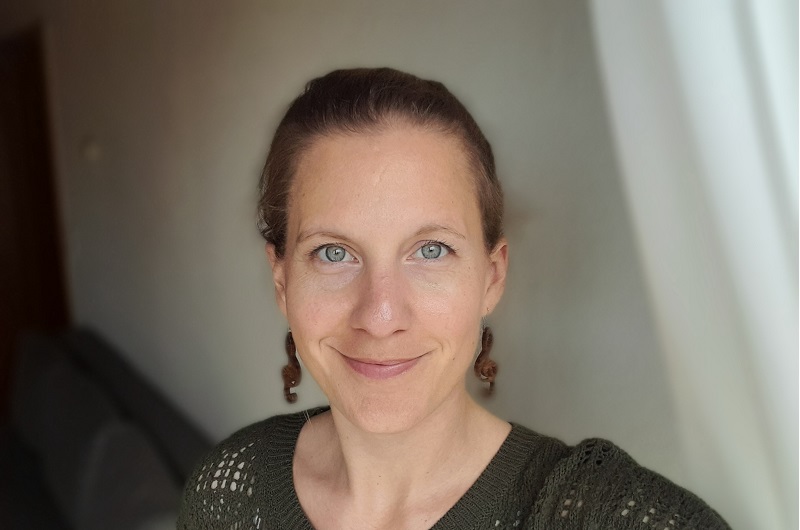
Katarina Damčević
Katarina Damčević’s research centers on the semiotics of hate speech and controversial symbols in (post)conflict societies with a regional focus on Southeast Europe. She defended her doctoral dissertation titled “Semiotics of Hate Speech and Contested Symbols: The ‘Za dom spremni’ Ustaša Salute in Contemporary Croatia” in 2023 at the University of Tartu in Estonia. Katarina was a research fellow in the US based Dangerous Speech Project, the Humanitarian Law Center in Belgrade, Serbia, and the seeFField Fellowship program at the University of Regensburg, Germany. Katarina is one of the co-founders of the Center for Holocaust and Genocide Research in Southeast Europe based in Croatia at the University of Rijeka’s Faculty of Humanities and Social Sciences. She teaches at the University of Tartu and contributes to the Journal Southeastern Europe (Brill) as an editorial team member. In March 2024 she joined IOS and the KonKoop network where she coordinated the KonKoop junior research group, and contributes to the creation of a database of knowledge-production centres for Peace and Conflict Studies in Eastern Europe. She is now a researcher at the Political Science Department of IOS.