
Martyna Miernecka, a UR postdoc working on queer cultures under Polish state socialism, reflects on her time spent as a visiting fellow at the Munk School in Toronto, where conversations that steadied her doubts, lectures by Marianne Hirsch and Adrian Ivakhiv brought inspiration, and hours spent trawling the archives of the exiled poet Wacław Iwaniuk and the Polish Gay and Lesbian Association, the “Polish Queens in Exile” enriched her research, while a detour to a Montréal ecomuseum offered valuable insights for her ecocritical approach. This engaging travelogue offers insights into research practices and Martyna Miernecka’s intersectional perspectives on queer life and culture, migration, and ecology, offering a reminder of how and why we do research at all.

Wacław Iwaniuk collections at the Library and Archives Canada / Bibliothèque et Archives Canada. Photo: Martyna Miernecka
Generate PDF
Framing the Visit
In an academic landscape increasingly shaped by budget cuts, temporary contracts, and profit-oriented demands for measurable outcomes, the space for critical thinking and bulding knowledge is becoming ever more fragile. Writing itself often seems like a solitary craft – one that’s painfully vulnerable to the pressures of overwork and perfectionism, feeding on our anxieties and doubts produced by late capitalism. I suspect many readers recognise the harsh realities of the academic job market: every day we’re expected to reach new heights of creativity to reassure our perpetually hungry sense of self‑worth, while competing en masse for yet another precarious position.
Shortly before my fellowship began, the European MSCA postdoctoral scheme announced what Olga Byrska, a PhD candidate at the European University Institute, called a ‘brutal’ 9.6% success rate, a level of competitiveness that has pushed many researchers – already facing massive cuts to the humanities and social sciences – into even deeper pessimism. As she told Times Higher Education: “For a scholarship of two-three years only, no matter how prestigious, it only shows how impossible academia has become. We must be pushing governments to enlarge spending for science and humanities, not to cut it,”
Of course, research stays cannot solve this systemic “apocalypse,” in Byrska’s words, but they can offer a kind of breathing space, a pause that hopefully makes it possible to rethink our priorities and, well, prevent yet another burnout.
doi number
10.15457/frictions/0050
Support Structures
Writing itself often seems like a solitary craft – one that’s painfully vulnerable to the pressures of overwork and perfectionism, feeding on our anxieties and doubts produced by late capitalism. […] Writing may seem like a solitary craft, but it is, on further reflection, an act that thrives on solidarity.
One of the advantages of the blog format is that it places acknowledgments not in the footnotes but at the very heart of the text. Writing may seem like a solitary craft, but it is, on further reflection, an act that thrives on solidarity. It relies on a whole backstage, in this case the infrastructure of the Leibniz ScienceCampus, often overshadowed by more tangible outcomes like sharp research papers. Why should dedicating space to gratitude outside the often-overlooked acknowledgments section be seen as trivial? The meetings at the Munk School of Global Affairs and Public Policy in Toronto with Rob Austin, Olga Kesarchuk, Katia Malyuzhinets, and Catherine Lukits were the core of this stay, and they should never be taken for granted. That is the real heart of it – the support we receive, the deep, renewing breath we had been needing for a long time.
I currently work as a postdoc in a wonderful Volkswagen Foundation-funded project, Light On, led by Tatiana Klepikova at the Department for Slavic Literatures and Cultures at the University of Regensburg, where we study queer literatures and cultures under socialism. In my work, I trace the intersections of artistic practice, queer ecologies, and the socio political realities of socialist Poland. It is, in many ways, my dream position. But it ends in under a year, and my stay at the Munk School in Toronto offered what I needed at this moment: inspiration, new ideas, and a sense of direction for whatever comes next.
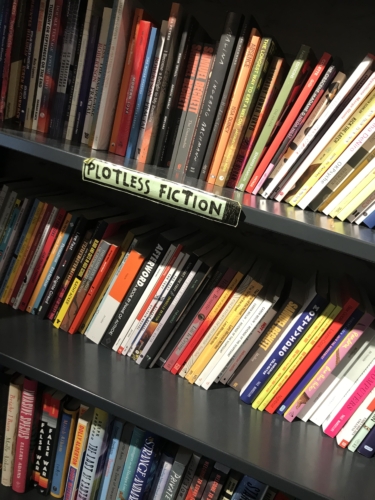
A Toronto bookshop. Photo: Martyna Miernecka
Lectures and Talks
Adrian Ivakhiv’s talk was a reminder of how intellectual work can respond to urgent historical moments without losing sight of broader planetary stakes
Although my visit coincided with the exam period, meaning there were fewer workshops and seminars than during term time, I still attended several great events. Hearing Marianne Hirsch speak in person was a long‑held dream come true. Her Northrop Frye Lecture at the Centre for Comparative Literature, Epiphanies of Repair: Memory Art and Practice, offered a glimpse into her ideas for a new book, sounding at once like an extension, a reframing, and a culmination of her work on postmemory. It felt like the opening of a new chapter in this field.
Equally compelling was listening to Adrian Ivakhiv at the Munk School, presenting his new anthology Terra Invicta: Ukrainian Wartime Reimaginings for a Habitable Earth. His talk explored how wartime experience reshapes the ecological imagination, weaving together the legacy of Chornobyl, Russia’s war, energy politics, and the climate crisis. It was a reminder of how intellectual work can respond to urgent historical moments without losing sight of broader planetary stakes.
At the Munk School, I met Karolina Koziura, the Petro Jacyk Post‑Doctoral Fellow, whose research examines the legacies of violence, identity formation, and the politics of knowledge in and about Eastern Europe. With extensive experience working in academia across the USA, Canada, and Europe, Karolina generously shared her insights on navigating academic career paths. Our exchange of strategies for dealing with work‑related doubts was so grounding – this will definitely stay with me.
Meeting Alexandra Rahr was genuinely energizing. With our shared background in literary studies, she grasped what I was trying to convey about my research almost instantly. Her advice on writing a post‑PhD book is something I want to embrace as well: I wrote my dissertation in one style, so perhaps it’s worth trying a different, more flexible kind of book next time, one that doesn’t have to be any less rigorous. Conversations like that bring a kind of relief – a reminder of why we do research at all.
Alexandra’s work on the climate crisis and environmental justice also resonated with my attempt to learn about the history of the place where I was conducting my research. Toronto is situated on land that was stolen from Indigenous peoples; it sits on the traditional territory of many nations, including the Mississaugas of the Credit, the Anishnabeg, the Chippewa, the Haudenosaunee, and the Wendat. These First Nations, Inuit, and Métis communities continue to face ongoing colonization and displacement. During my stay, I read Tanya Talaga’s Seven Fallen Feathers: Racism, Death, and Hard Truths in a Northern City. Talaga is of Anishinaabe and Polish descent and grew up in Toronto. I also sought out exhibitions and performances (White Girls in Moccasins at the Native Earth Performing Arts!) concerning anti-racism and decolonization that foregrounds the perspectives, experiences, and political agency of Black, Indigenous, racialized communities.
This perspective was instructive – especially in the context of the project I’m currently organizing, Queer Ecologies Under Socialisms, supported by the Leibniz ScienceCampus. The aim is to learn from scholars whose perspectives remain too often marginalized in both queer studies and environmental research. Moving beyond Western- and Eurocentric assumptions, the project seeks to approach gender, sexuality, race, and class as interconnected dimensions that shape both ecological and sexual governance.

Library and Archives Canada / Bibliothèque et Archives Canada – where there are significant collections on the writer Wacław Iwaniuk. Photo: Martyna Miernecka
Archival Findings: Libraries and Fonds
[Wacław Iwaniuk is] an underexplored figure from a queer perspective who might open new directions for my research. Working through his papers, correspondence, and publications felt like gathering a set of clues about queer exile and how such narratives were often elided across transnational contexts.
Besides meetings, I spent most of my time in libraries, with Knox College quickly becoming my favourite. Given my aim of incorporating emigrant perspectives into my ongoing research on queer cultures under state socialism in Poland, I focused on materials related to the queer Polish diaspora in Canada.
My archival work took me to Ottawa, where I consulted the Wacław Iwaniuk (1912–2001) collection at the Library and Archives Canada / Bibliothèque et Archives Canada. A Polish poet, translator, critic, and essayist who emigrated to Canada in 1948 and lived in Edmonton, Ottawa, and Toronto, Iwaniuk founded the literary‑artistic club Smocza Jama (Dragon’s Lair) in Toronto in the early 1950s and published widely in émigré and Polish periodicals. As Piotr Sobolczyk notes in Polish Queer Modernism, Iwaniuk witnessed major legal and social shifts in Canada, from the depenalization of homosexuality in 1969 to the introduction of civil partnerships in 1996; he lived with his partner in Toronto, yet this aspect of his life is scarcely discussed, even in monographs.
This relative invisibility is part of a broader pattern in which queer lives and experiences of exile have been systematically overlooked or made difficult to articulate. What can Iwaniuk’s materials tell us about the silences that have shaped how queer migration is-or is not-remembered and written about? Working through his papers, correspondence, and publications felt like gathering a set of clues about these silences across transnational contexts.

Entrance to The ArQuives, which collects materials on 2SLGBTQIA+ (Two-Spirit, lesbian, gay, bisexual, transgender, queer, intersex, asexual, and other sexually and gender-diverse identities). Photo: Martyna Miernecka
Community Histories and the PGLA Case
Similarly, in the archival strand of my stay in Toronto I worked at The ArQuives, which collects materials on 2SLGBTQIA+ (Two-Spirit, lesbian, gay, bisexual, transgender, queer, intersex, asexual, and other sexually and gender-diverse identities) people in Canada. I concentrated on the history of the Polish Gay and Lesbian Association (PGLA), sometimes called the Polish Queens in Exile, founded in Toronto in 1992 and active until 2008. Led largely by Kazik Jędrzejczak, the PGLA built networks of mutual support for Polish gays and lesbians in Canada while campaigning for rights and broader social tolerance. The association was particularly involved in HIV/AIDS outreach, education, and advocacy, and it supported initiatives in both Canada and Poland through fundraising and transnational cooperation. Among its public events, the annual “Polish Night at Woody’s”, a popular gay bar in Toronto’s Church-Wellesley Village, was probably the most famous.
With the help of Daniel Payne, Reference Archivist at The ArQuives, I consulted the PGLA fonds and interviewed one of the association’s activists, John Stanley. His recollections were invaluable: he also described queer spaces in 1970s Poland and recounted his own coming out there. Those memories are an important contribution to thinking about how interactions between state-socialist and capitalist blocs were complex and reciprocal.
John also drew attention to the connections between 2SLGBTQIA+ rights movements and other grassroots struggles, a point that is important for studying transnational flows of cultural practices.
Museum Interventions
PGLA’s history nudged me toward places that map social movements in relation to everyday life. I travelled to Montréal to visit L’Écomusée du Fier Monde, a history and community ecomuseum that aims to maintain a close relationship between the museum and its social and physical environment by highlighting labour and civic engagement in Montréal.
The museum foregrounds how different forms of discrimination affect people and communities – both directly and through deeper systemic structures – and it explicitly attends to intersectionality, showing how various forms of discrimination overlap, including those experienced by diverse Indigenous groups. Its permanent exhibition traces how, in the 1960s, people formed local community committees to address everyday needs – access to food, housing, and women’s rights, and how by the 1970s, that grassroots energy expanded into a dense ecosystem of community organisations.
My visit to the museum offered concrete models for thinking about 2SLGBTQIA+ movements as integral parts of broader social histories and for doing queer studies in an intersectional way. The museum uses exhibitions and public programming as tools for education and as spaces for exchange – locally, across Canada, and internationally. It is a useful example of how to move beyond often hermetic academic discourses and engage publics directly.

L’Écomusée du Fier Monde, Montréal. Photo: Martyna Miernecka.
Plans in Progress
These encounters widened the frame of my research, shifting it from a primarily Polish context toward a more comparative, transnational understanding of queer cultural production. They opened up questions: How did Polish queer migration contribute to cultural production abroad? How did these practices reconfigure urban spaces, creating new venues, events, and networks, from literary clubs in Toronto to gatherings like the Polish Night at Woody’s? Supported by the Leibniz ScienceCampus, my next projects aim to follow these threads, including intersectional perspectives and grassroots histories, to explore how queer life and environmental governance intersect across political and geographic contexts.
The materials I worked with – Iwaniuk’s letters, PGLA flyers, oral histories, museum displays – underscore the continuing need for interdisciplinary approaches. The archival traces, museum practices, and conversations with colleagues and community members together point toward research that is attentive to marginalised perspectives and rooted in the social worlds it studies.

© 2026. This text is openly licensed via CC-BY. The images are not subject to a CC licence.